AI for Academic Research

This multi-part project introduces you to NotebookLM, a source-grounded AI research assistant. You will use it to conduct deep research on an advanced STEM topic and then communicate your findings in a simple, engaging way. The core objective is to master a new topic and learn how to use AI as a powerful research and thinking partner, not as a shortcut.
Setup
- Open Google Chrome and Install the 1VPN Extension
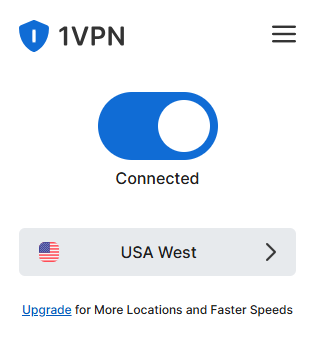
- Launch the 1VPN plugin and connect to USA West
- Open NotebookLM at notebooklm.google
The Research Worksheet: Your Step-by-Step Guide
Follow these phases to complete your project. Each phase uses a different feature of NotebookLM.
Phase 1: Topic Launch & Initial Research
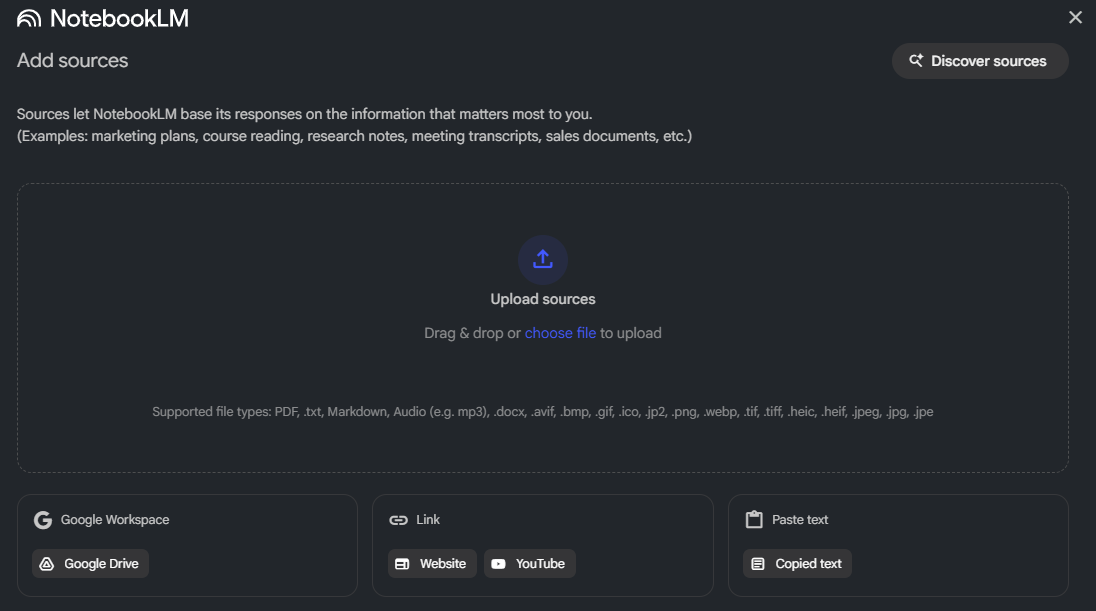
- Your Task: Create a new notebook in NotebookLM and upload 3-5 credible sources (PDFs, web articles, textbook chapters) on your chosen topic.
- Tool to Use: Source Panel & Chat. Use the chat to ask broad questions like “Explain the core principles of [my topic] as if I’m a beginner” or “What are the key challenges in this field?”.
- Deliverable: A Briefing Document (1 page). Summarize the core idea, key terms, and one “big question” you want to answer.
Phase 2: Deep Dive & Making Connections
- Your Task: Move from gathering facts to understanding relationships between concepts.
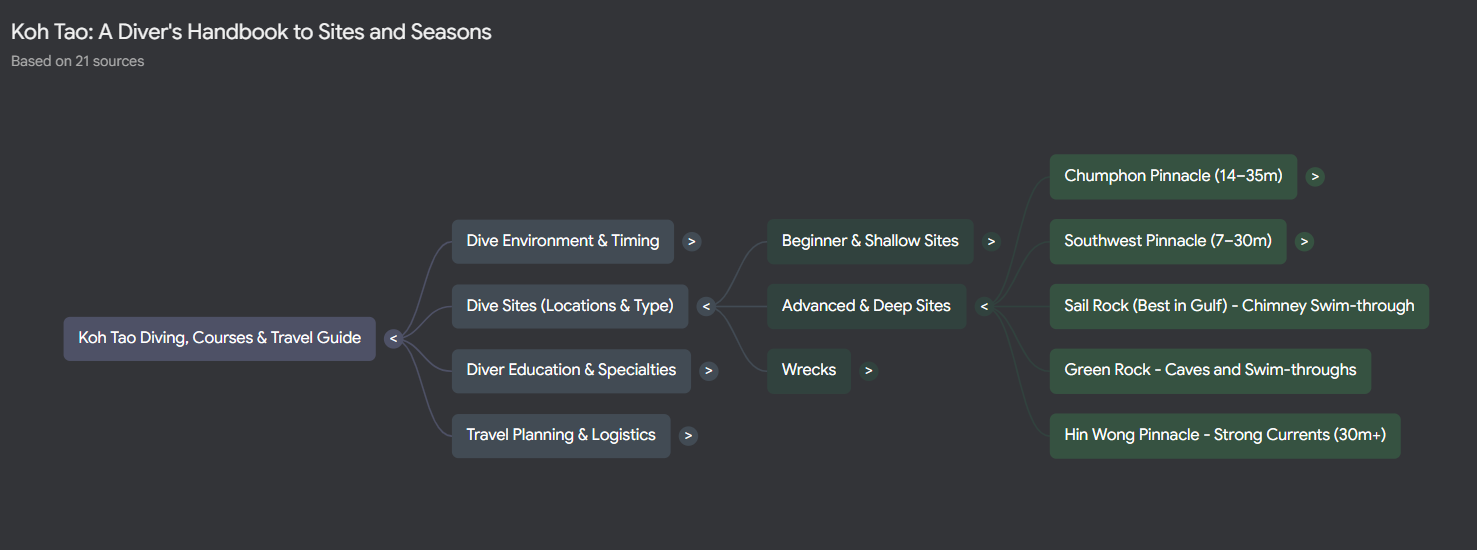
- Tool to Use: Mind Map Feature. Generate a mind map from your sources. This will create a visual web of connected ideas.
- Click on nodes to explore subtopics.
- Identify the 3-5 most central ideas for your final presentation.
- Deliverable: A refined Mind Map. You can screenshot the AI-generated map or redraw it by hand, highlighting the path you will take for your presentation.
Phase 3: Interactive Learning & Content Creation
- Your Task: Use AI to generate and verify different explanations of your topic.
- Tool to Use: Video Overview & Study Guide.
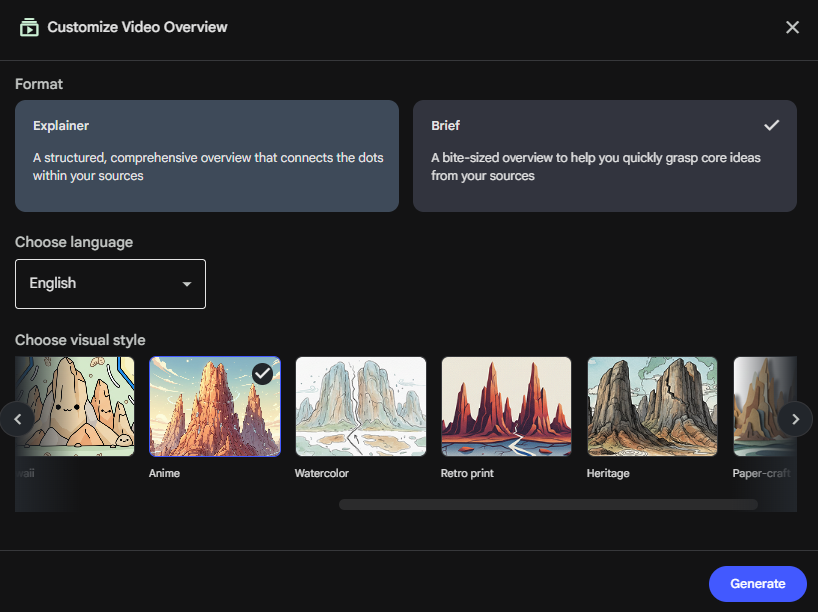
- Generate an Video Overview in “Explainer” or “Brief” mode. Watch the AI presentation to learn about the topic.
- Generate a Study Guide. Use the glossary for key terms and the quiz to test your own understanding.
- Chat with the AI: Ask it to “Explain [complex concept] using an analogy a 10-year-old would understand.” Refine the analogy until it’s perfect.
- Deliverable: Notes containing:
- Two simple analogies for core concepts.
- Three key facts for “How is it used in real life?” section.
- One exciting possibility for the “Future applications” section.
Phase 4: Synthesis & Presentation Design
- Your Task: Synthesize your research into clear, visually engaging outputs for a young audience.
- Tool to Use: Custom Report & Your Creativity.
- Create a simple Infographic
- In the customize panel, include: a title, 1 core analogy, 3 key facts, and 2 real-world uses.
- In the customize panel, include: a title, 1 core analogy, 3 key facts, and 2 real-world uses.
- Design a Presentation (4-5 slides). Structure it for a 10-year-old:
- Slide 1: The Big Idea: Use your best analogy.
- Slide 2: How It Works: Simplify a core principle.
- Slide 3: Real-World Superpowers: Where do we see this today?
- Slide 4: Future Magic: What might it do tomorrow?
- Slide 5: Learn More: One cool resource (book, video, museum).
- Create a simple Infographic
- Deliverable:
- Give a 10 minute presentation using the slides and infographic as aids
Research Topics
You can choose from one of the topics below for your research project. Remember, the idea to to learn about something you with unfamiliar with the help of AI.
Energy & Physics
- Nuclear Fusion (Stellar Nucleosynthesis): Investigate the process that powers the sun, where light atoms combine under extreme heat and pressure to release vast amounts of energy.
- Nuclear Fission (Chain Reaction): Explore how splitting a heavy atom’s nucleus releases energy and neutrons, which can then split more atoms in a controlled chain reaction for power.
- Rocket Propulsion (Rocket Equation / Tsiolkovsky): Discover how rockets work by throwing mass backward at high speed (action-reaction) and why they need so much fuel to reach orbit.
- Aerodynamics of Flight (Bernoulli’s Principle / Lift): Learn how the shape of a wing (an airfoil) changes the speed and pressure of air flowing over it to generate an upward force called lift.
- Gravity Assist (Oberth Effect / Slingshot Maneuver): Explore how spacecraft use a planet’s gravity to gain speed without fuel, like a skateboarder grabbing a moving bus.
- The Magnus Effect: Discover how spin on a ball creates different air pressures, making a soccer ball or baseball curve in flight.
- Electromagnetic Levitation (Maglev): Learn how repelling magnetic forces can make a train float above its tracks, eliminating friction for ultra-fast travel.
- Heat Pump Thermodynamics (Refrigeration Cycle): Understand the “heat ferry” system that moves existing thermal energy to efficiently heat or cool a building.
- Photovoltaic Effect (Solar Panels): Discover how particles of light (photons) knock electrons loose in materials like silicon to create a flow of electricity.
- Orbital Mechanics (Kepler’s Laws / Hohmann Transfer): Learn the rules objects follow when circling planets and the most fuel-efficient path to transfer a satellite between orbits.
- Archimedes’ Principle & Naval Architecture (Buoyancy/Displacement): Analyze how a ship’s carefully designed hull displaces a massive weight of water, creating an upward force greater than the ship’s weight.
Technology & Computing
- Capacitive Sensing (Touchscreens): Understand how your finger completes a tiny electrical circuit on a screen, telling your phone exactly where you touched.
- Electrochemistry (Lithium-ion Batteries): Explore how moving lithium ions between two electrodes stores and releases electrical energy to power your devices.
- Quantum Computing & Superposition: Investigate how quantum bits (qubits) can be in multiple states at once, potentially solving problems impossible for today’s computers.
- Facial Recognition Systems (Biometric AI): Find out how your phone maps the unique geometry of your face and matches it to a stored mathematical model.
- Graph Theory & Pathfinding Algorithms (e.g., Dijkstra’s Algorithm): Uncover the math Google Maps uses to model roads as a web and calculate the fastest route among millions of options.
- Infrared Astronomy (James Webb Space Telescope): Discover how detecting invisible infrared light (heat) lets telescopes see through cosmic dust to the earliest galaxies.
Biology, Chemistry & Medicine
- mRNA Vaccine Technology: See how vaccines use messenger RNA to give your cells instructions to build a harmless “practice” virus, training your immune system.
- CRISPR-Cas9 Gene Editing: Investigate how a bacterial defense system was adapted to act like molecular scissors, allowing precise editing of DNA code.
- Myoelectric Prosthetics / Brain-Computer Interfaces (BCI): Explore how robotic limbs detect tiny electrical signals from your muscles or brain to move.
- Ultrasonography (Medical Ultrasound): Learn how bouncing high-frequency sound waves off internal structures creates images, like sonar for the human body.
- Shape-Memory Alloys (e.g., Nitinol): Study “smart” metals that can be bent out of shape but remember and snap back to their original form when heated.
Tourism / Travel Destination
Alternatively, instead of a STEM research topic, you are welcome to take on the role of a tour guide. Use NoteboookLM to plan a travel itinerary along with a briefing of history and fun facts on various interesting sites.
This modified assignment transforms your role from STEM researchers into cultural and scientific explorers. Instead of lab-based topics, choose a destination like Egypt or Iceland and use AI (NotebookLM) to research its geography, history, and engineering marvels. Your goal is to create a compelling travel package: a detailed itinerary that logically groups sites, a briefing document of fascinating facts and historical context (using UNESCO criteria as a guide), and a visual presentation or infographic that “sells” the educational trip. The core skills of sourcing, synthesizing, and simplifying complex information remain the same, but are applied to planning a real-world journey that blends adventure with learning about human and natural history.
- Phase 1: Destination Briefing:
Use AI to research destination history, culture, and key sites. Create a one-page overview with “must-know” facts. - Phase 2: Itinerary & Mind Map:
Build a logical, engaging travel itinerary (e.g., a 5-day trip). Use AI’s mind map to connect sites thematically (e.g., “Water Engineering in Rome”). - Phase 3: Interactive Deep Dive:
Chat with AI to get local insights, translate phrases, or simulate historical events at sites. - Phase 4: Presentation & Infographic:
Create a travel brochure (infographic) and a short presentation pitching the trip, highlighting the mix of fun, history, and learning.- Design a 10 minutes Tour Presentation (4-5 slides) targetted toward the general public.
- Section 1: Background information about the destination (location, weather, etc).
- Section 2: Travel itinerary and transportation logistics (include specfic dates, as that might affect seasonal destinations).
- Section 3: Fun facts and history about highlighted sites.
- Section 4: What to prepare for the trip (Do you need a visa? What clothing to bring? Currency? Electrical outlets?).
- Section 5: Cost breakdown.
- Design a 10 minutes Tour Presentation (4-5 slides) targetted toward the general public.
Category 1: Ancient Engineering & Civilizations
- Egypt
- Core Focus: Monumental engineering (pyramids, temples), astronomy, and Nile River hydrology.
- Assignment Hook: Investigate the logistics of pyramid construction or the ancient Egyptian calendar.
- Rome, Italy
- Core Focus: Civil engineering (aqueducts, roads, concrete), archaeology, and urban planning.
- Assignment Hook: Analyze how Roman concrete lasts longer than modern versions or map the Appian Way network.
- Angkor Wat, Cambodia
- Core Focus: Hydraulic city engineering, temple astronomy, and jungle archaeology.
- Assignment Hook: Study the vast water management system or how temples align with solstices.
- Machu Picchu & The Inca Empire (Peru)
- Core Focus: Seismic-resistant architecture, mountain agriculture (terraces), and astronomy.
- Assignment Hook: Discover how Inca stonework withstands earthquakes or their celestial observation methods.
Category 2: Earth Science & Extreme Environments
- Iceland
- Core Focus: Volcanology, geothermal energy, glaciology, and tectonic plate boundaries.
- Assignment Hook: Plan a “Land of Fire and Ice” route and explain geothermal power plants or volcano monitoring.
- The Himalayas (Nepal or Bhutan)
- Core Focus: Mountain geology, glaciology, climate science, and high-altitude adaptation.
- Assignment Hook: Research plate tectonics forming Everest or how communities adapt to high altitudes.
- The Amazon Rainforest (Brazil/Peru)
- Core Focus: Biodiversity, ecosystems, medicinal botany, and rainforest climate role.
- Assignment Hook: Create a sustainable ecotourism itinerary focusing on unique species or canopy research.
- The Great Barrier Reef (Australia)
- Core Focus: Marine biology, coral reef ecosystems, ocean acidification, and conservation.
- Assignment Hook: Design a snorkeling research trip explaining coral bleaching and reef protection.
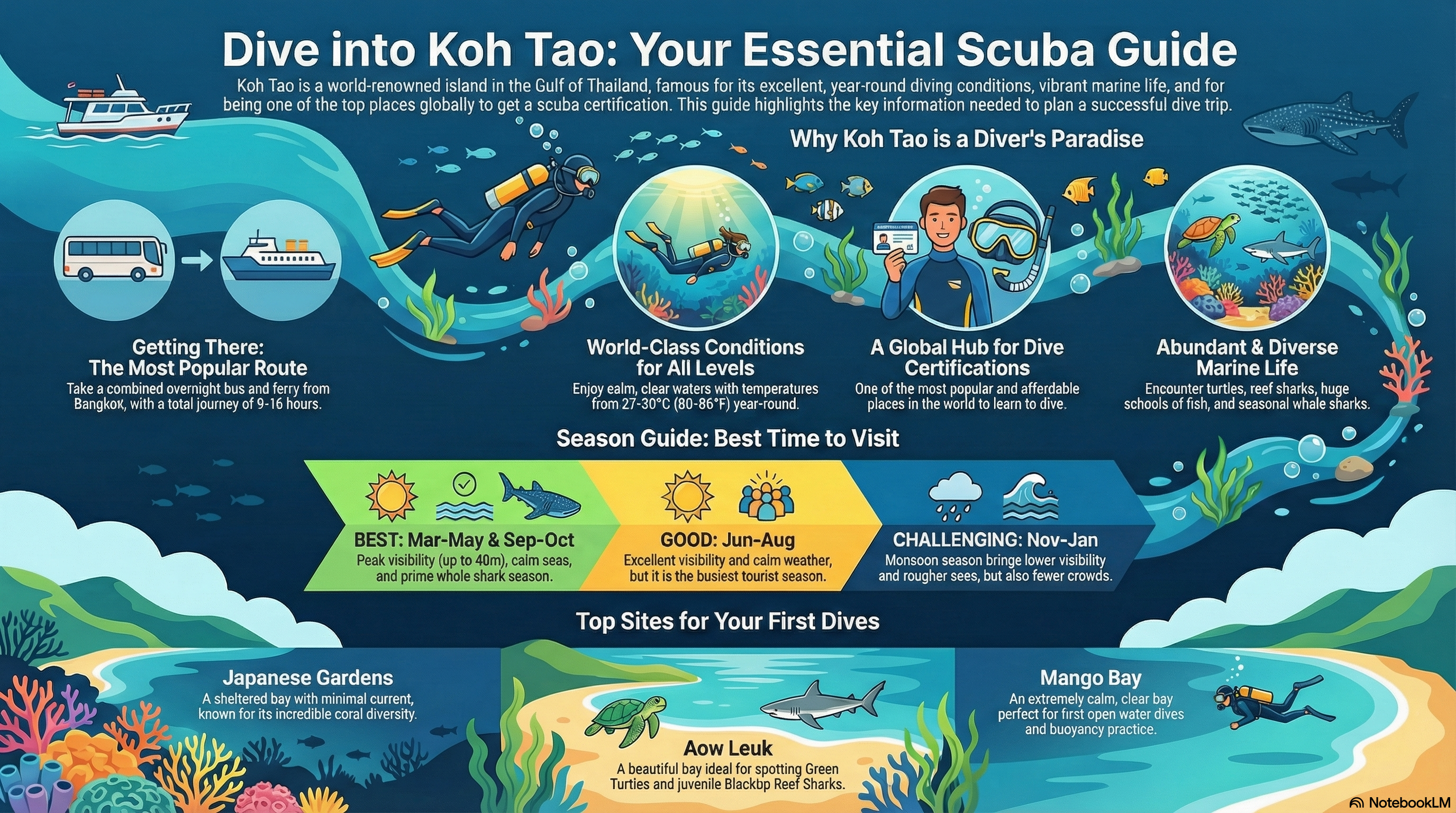
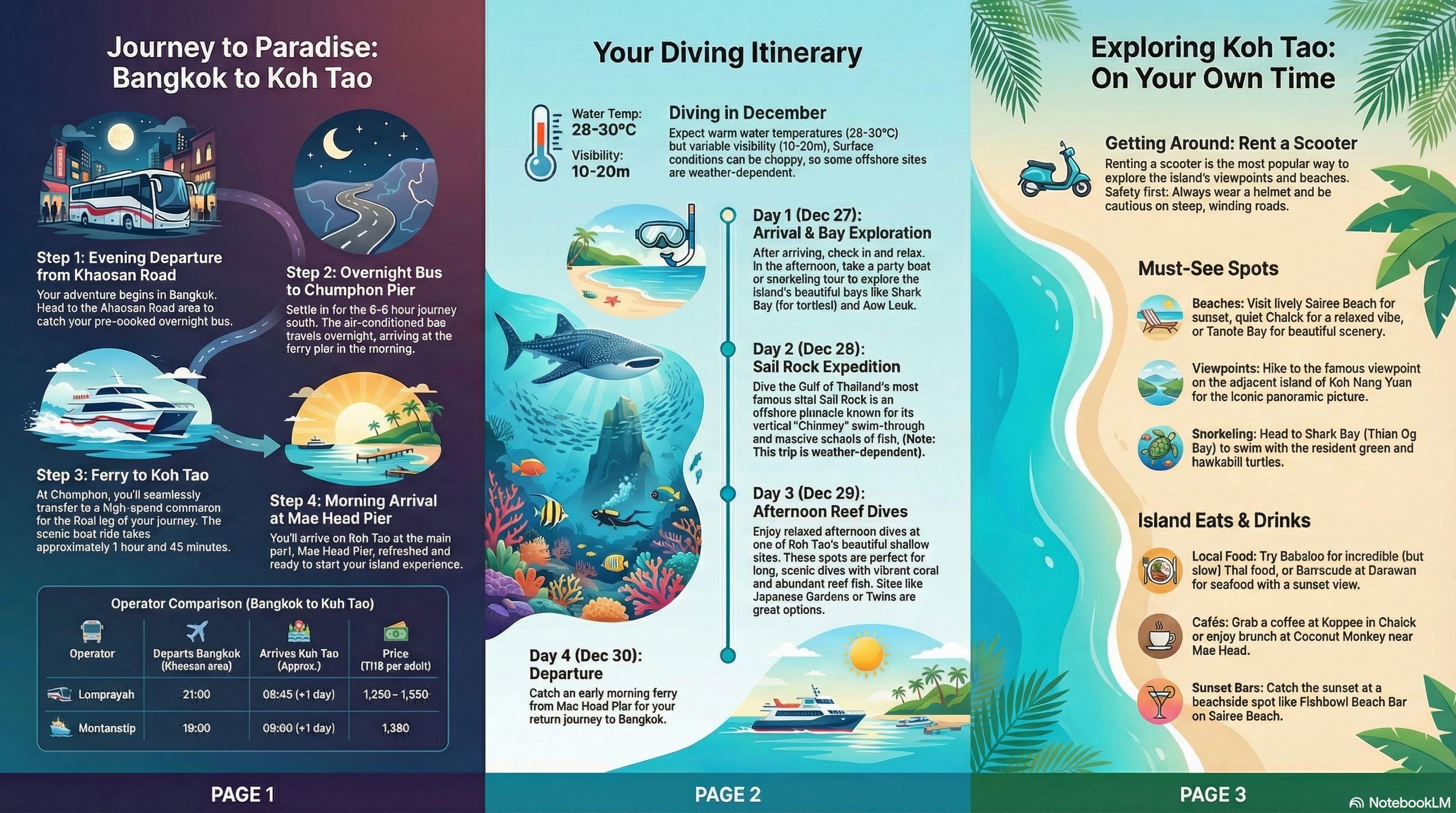
- Koh Tao, Thailand
- Core Focus: Marine biology, coral reef ecosystems, scuba diving science, and marine conservation.
- Assignment Hook: Design a “Dive Master for a Week” itinerary that explains the science of buoyancy and decompression, identifies key coral and fish species, and researches local reef restoration projects.
- Hong Kong, China
- Core Focus: Urban science, megacity engineering, telecommunications, and the fusion of traditional Chinese cosmology (Feng Shui) with modern architecture.
- Assignment Hook: Investigate how one of the world’s densest cities functions, from its massive skyscraper foundations and tunnel systems to the use of Feng Shui principles in building design, creating an itinerary that contrasts ancient markets with cutting-edge infrastructure.
Category 3: History of Science, Innovation & Urban Ecosystems
- Silicon Valley, USA
- Core Focus: Tech innovation history, computer science evolution, and future tech trends.
- Assignment Hook: Map a “Tech History Tour” from early garages to modern companies like Apple or Google.
- Kyoto, Japan
- Core Focus: Traditional craftsmanship, modern robotics, and harmony between old and new tech.
- Assignment Hook: Contrast ancient temples with modern bullet trains and robotics labs.
- Athens & Ancient Greece
- Core Focus: Birth of scientific thought, mathematics, philosophy, and classical architecture.
- Assignment Hook: Trace the footsteps of philosophers and explore the math behind the Parthenon.
Category 4: Space & Astronomy Heritage
- New Mexico, USA
- Core Focus: Ancient astronomy (Chaco Canyon), modern space history, and the Trinity test site.
- Assignment Hook: Create an itinerary linking ancient celestial observatories to the Roswell museum and Spaceport America.
- La Palma & Tenerife, Canary Islands
- Core Focus: Astrophysics, world-class observatories, and unique volcanic landscapes.
- Assignment Hook: Plan a stargazing trip explaining why the peaks are perfect for telescopes.
Category 5: Unique Cultural & Ecological Systems
- The Netherlands
- Core Focus: Water management, hydraulic engineering, land reclamation, and sustainable agriculture.
- Assignment Hook: Focus on the Delta Works or polder systems as engineering marvels.
- Morocco
- Core Focus: Desert ecology, ancient trade (astronomy for navigation), and intricate geometry in art/architecture.
- Assignment Hook: Create a Sahara Desert route explaining navigation or the math behind mosaic patterns.